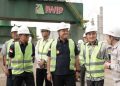


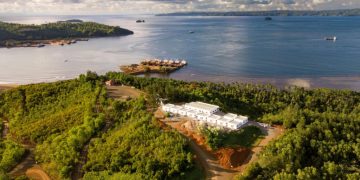












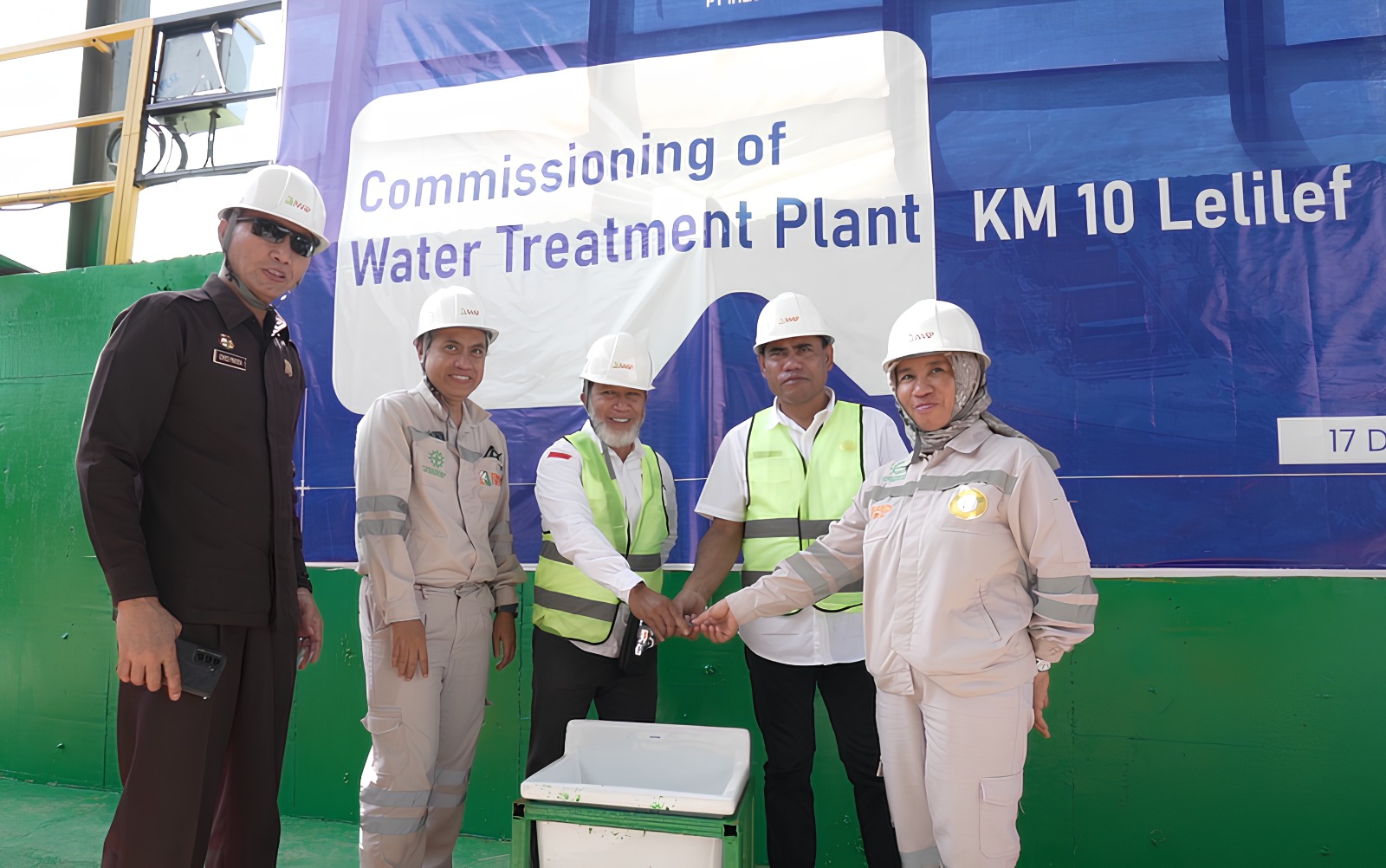
Central Halmahera, Indonesia — January 26, 2026 — PT Indonesia Weda Bay Industrial Park (IWIP) has officially inaugurated the Lelilef Water Treatment Plant (WTP) as part of its continued commitment to expanding access to clean water for communities near its industrial operations.
The ceremony, held in the Central Halmahera region of North Maluku, underlines IWIP’s strategic role in addressing critical community needs alongside its core industrial activities. The facility is expected to significantly improve the availability of potable water for residents, particularly in Lelilef Sawai and Lelilef Waibulan villages, where reliable clean water access has long been a priority.
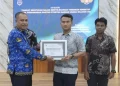
Local leaders expressed their appreciation for the project’s potential impact. Frileks Arbaben, Head of Lelilef Sawai Village, praised IWIP’s efforts, emphasizing that the plant represent not just an infrastructure milestone but a vital support to local public services. Faisal Moh. Djamil, Head of Lelilef Waibulan Village, echoed these sentiments, describing the WTP as an important step toward improving daily life and community well-being.
The plant boasts a substantial production capacity of up to 10.2 million liters of clean water per day — roughly 600,000 liters per hour — making it a significant asset for local water security and health outcomes. IWIP officials highlighted that the project forms part of the company’s broader social responsibility framework, with a focus on sustainable community development.
According to IWIP representative Lukman Hakim, the success of this initiative will depend not only on infrastructure availability but also on the effective management and sustainable operation of the facility in cooperation with government and community stakeholders. He emphasized that ongoing maintenance and community engagement will be crucial to ensuring long-term benefits.
The plant’s inauguration reflects IWIP’s efforts to align industrial growth with positive local socio-economic outcomes a model increasingly highlighted across nickel-producing regions where community infrastructure and industrial development intersect.