



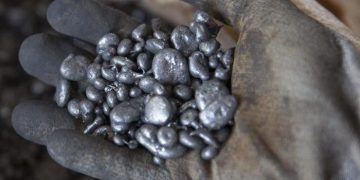
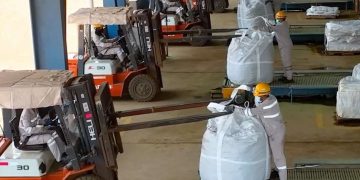









Indonesia Weda Bay Industrial Park (IWIP), located in Central Halmahera, North Maluku, continues to consolidate its role as a key driver of Indonesia’s emerging eastern economic corridor through the downstream development of nickel. With total committed investment exceeding IDR 500 trillion, the integrated industrial park has become a major pillar in the country’s broader economic transformation strategy.
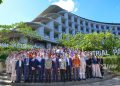
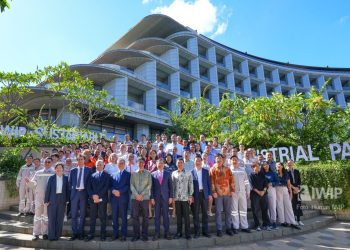
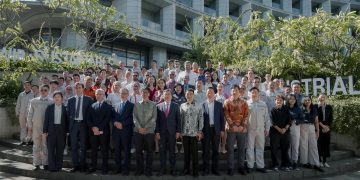
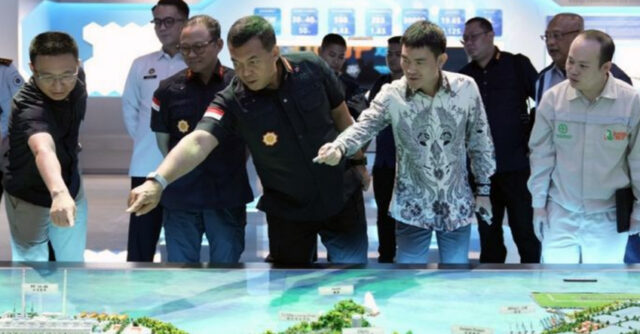
The assessment was highlighted during a working visit by Indonesia’s Vice Minister of Immigration and Corrections, Silmy Karim, to the IWIP area on 12–13 January 2026.
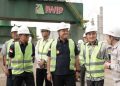
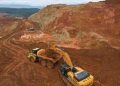
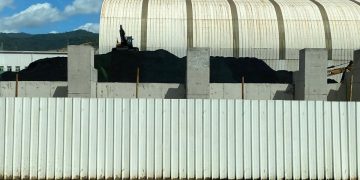
During the visit, the Vice Minister conducted an on-site review of critical infrastructure supporting the industrial zone, including dedicated immigration services at IWIP’s domestic airport, port facilities, power generation units, nickel smelters and processing plants, as well as battery-related industries.
According to Silmy, economic activity within IWIP has been expanding at an estimated rate of around 20 percent annually, significantly outpacing the national average. This rapid growth, he noted, requires responsive and professional immigration services to ensure smooth flows of investment, skilled labour and international partnerships.
“Given the scale of industrial operations in the area, robust immigration services are essential to sustaining investment momentum and supporting long-term economic growth,” Silmy said in an official statement.
He added that IWIP’s progress has been underpinned by strong inter-agency coordination involving the Ministry of Immigration and Corrections, the Directorate General of Customs and Excise, the National Quarantine Agency, as well as operational support from the Indonesian National Armed Forces and the National Police. This cross-institutional collaboration has been crucial in ensuring compliance with regulations and alignment with national development objectives.
IWIP Director Scott Ye described the government visit as a strategic opportunity to further strengthen coordination between regulators and industrial zone operators. He emphasized that consistent government support has helped ensure workforce management and international cooperation at IWIP remain aligned with national policies.
“Closer coordination improves the effectiveness of regulatory implementation on the ground and provides greater certainty for investors,” Scott Ye said.
The development of IWIP also aligns with Indonesia’s broader push to accelerate downstream industrialization. Earlier, Indonesia’s Daya Anagata Nusantara Investment Authority (Danantara) identified 18 priority downstream projects with a combined investment value of approximately USD 38.63 billion, equivalent to around IDR 618 trillion. These projects are expected to generate more than 276,000 jobs nationwide.
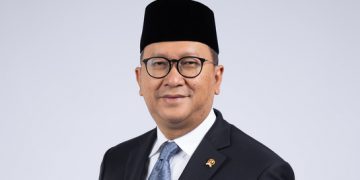
Danantara Chairman Rosan Roeslani previously stated that the downstream initiatives span multiple strategic sectors, including minerals and coal, agriculture, fisheries and marine industries, as well as energy transition and energy security. Among these, the minerals and coal sector is projected to absorb over 100,000 workers, followed by fisheries, agriculture and energy.
President Prabowo Subianto has reportedly instructed that the implementation of these downstream projects be accelerated, underscoring their importance in creating quality employment and strengthening Indonesia’s economic structure.
Supported by policy alignment, large-scale investment and integrated industrial infrastructure, IWIP continues to reinforce its standing as a new growth center for nickel-based downstream industries in Indonesia.